
If you're a marketer, blogger, or business owner, you’ve heard the annual rumor: "SEO is dead." And every year, that rumor proves false.
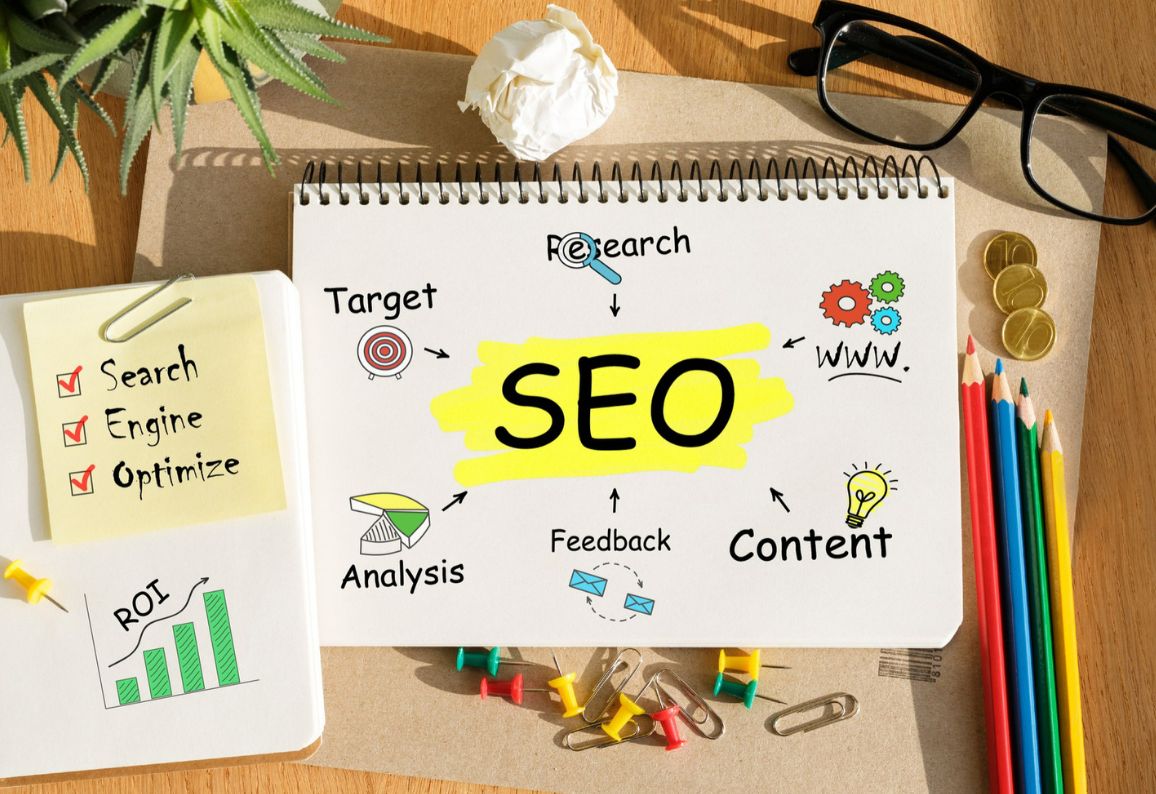
However, in 2026, it's fair to say that "old SEO" is dead.
The days of keyword stuffing, spammy link building, and churning out shallow, AI-generated articles are definitively over. Google, armed with its AI Overviews and a relentlessly refined Helpful Content System, has evolved. It can now effectively distinguish between genuine, first-hand experience and superficial content created just to rank.
The new game isn't about tricking an algorithm. It's about providing such exceptional value to the user that Google wants to rank you. It's about building a brand that Google sees as a reliable, authoritative, and trustworthy source of information.
The fundamentals—like keywords and links—still matter, but their context has changed entirely. In this guide, we'll break down the five most critical SEO trends you must master to succeed and rank in 2026.
The single biggest shift in the search engine results page (SERP) is the full-scale rollout of AI Overviews (formerly Search Generative Experience or SGE). When you search for something, Google no longer just presents ten blue links. It now often provides a comprehensive, AI-generated answer right at the top.
AI Overviews synthesize information from multiple web pages to provide a direct, conversational answer to a user's query.
The Shift: Users get their answers without ever needing to click on a website. This is the rise of the "zero-click search."
The Challenge: Your page might be a source for the AI Overview, but you may not get the click. This forces a fundamental shift from optimizing for clicks to optimizing for inclusion.
If you can't beat the AI, join it. Your new goal is to become a primary source that Google's AI trusts and references. When your site is cited in an AI Overview, it builds immense authority and drives highly qualified traffic from users seeking more depth.
Answer Questions Directly: Structure your content to provide clear, concise, and expert answers to common questions (the "Who, What, When, Where, Why, and How"). Use FAQ schema to explicitly signal these Q&As to Google.
Get to the Point (Fast): Don't bury the lead. Answer the user's core question in the first or second paragraph. You can expand with details later, but that initial, clear-cut answer is what the AI is looking for.
Use Structured Data: Organize your content with clear headings (H2, H3), bullet points, and numbered lists. This machine-readable formatting makes it easy for AI to parse your information and present it as a step-by-step process or a clear list.
Prioritize Verifiable Facts: Back up your claims with data, statistics, and links to other authoritative sources. AI models are trained to identify and prioritize content that is well-supported and factual.
For years, we focused on E-A-T (Expertise, Authoritativeness, Trustworthiness). In late 2022, Google added a new "E": Experience. This was not just a minor addition; it was a fundamental change in how Google evaluates content quality.
Experience: Does the content creator have first-hand, real-life experience with the topic?
Expertise: Does the creator have the necessary knowledge or skill in the field?
Authoritativeness: Is the creator or website widely recognized as a go-to source by others in the industry?
Trustworthiness: Is the site secure (HTTPS), transparent about its authors, and accurate?
Google wants to save users from generic, regurgitated content. If you're searching for "best hiking boots review," do you want an article from a random content farm, or one from a person who has actually hiked 100 miles in those boots?
The "Helpful Content System" actively demotes unhelpful content and rewards content that demonstrates a "satisfying experience."
Show, Don't Just Tell: Use original photos and videos. If you're reviewing a product, show yourself unboxing it and using it. If you're giving a tutorial, include screenshots of your process.
Write in the First Person: Use "I," "we," and "my" to share your personal journey, opinions, and hard-won lessons. "In my experience..." or "What I learned after..." are now powerful ranking signals.
Create Detailed Author Bios: Your "About" page and individual author bios are critical E-E-A-T assets. Don't just list a name. Include credentials, links to social profiles (like LinkedIn), other publications, and a clear description of the author's real-world experience on the topic.
Include Expert Quotes: If you're not the primary expert, interview one. Including quotes from recognized authorities in your field instantly boosts your content's Expertise and Authoritativeness.
The days of "one page, one keyword" are long gone. Google's algorithm no longer thinks in terms of isolated keywords; it thinks in terms of topics and entities.
To rank for a competitive term like "cryptocurrency," you can't just write one great article. Google needs to see you as an authority on the entire topic of cryptocurrency. This means covering everything from "what is blockchain" and "how to use a cold wallet" to "DeFi staking explained."
Identify Your "Pillar" Topics: What are the 3-5 core subjects you want to be known for? These are your "Pillar Pages"—long-form, comprehensive guides (like this one).
Create "Cluster" Content: These are shorter articles that dive deep into specific sub-topics related to your pillar. For example, if your pillar is "SEO," your clusters would be "keyword research," "link building," "technical SEO," etc.
Interlink Strategically: This is the glue that holds the strategy together. Your cluster articles should all link back up to your main pillar page. And your pillar page should link out to all its supporting cluster articles. This internal linking structure signals to Google that you have a deep and well-organized body of knowledge on a subject, establishing your topical authority.
You can have the most well-written, E-E-A-T-optimized article in the world, but if it doesn't match the user's intent, it will not rank.
Search intent is the "why" behind a search query. Is the user trying to learn something (Informational), buy something (Transactional), find a specific website (Navigational), or compare options (Commercial)?
Analyze the Top 5 Results: Before writing a single word, Google your target keyword. What kind of content is ranking?
Are they blog posts ("how-to" guides)?
Are they product category pages (e-commerce)?
Are they review/comparison pages?
Are they short videos?
Match the Format: If the entire first page is "Top 10" listicles, your in-depth essay probably won't rank. You must match the format and content type that Google has already determined is most helpful for that query.
Satisfy the Entire Journey: Go beyond the primary intent. If someone searches for "best running shoes" (Commercial), they probably also have informational needs. Answer follow-up questions in your content: How to choose the right shoe for your foot type? What's the difference between trail and road shoes? How long do running shoes last? This creates a comprehensive resource that satisfies multiple needs and keeps users on your page longer.
Your amazing, helpful, E-E-A-T-focused content won't matter if Google can't find, crawl, or understand it, or if it provides a terrible experience for the user.
While AI and content quality are the new stars, technical SEO is the stage they perform on.
Core Web Vitals (CWV): This is non-negotiable. Your site must be fast, responsive, and stable.
LCP (Largest Contentful Paint): How fast does your main content load? (Aim for < 2.5 seconds).
INP (Interaction to Next Paint): How fast does your page respond to a user's click? (This replaced FID and is crucial).
CLS (Cumulative Layout Shift): Does your page jump around as it loads? (Keep this near zero). Use Google's PageSpeed Insights to check your scores and get recommendations.
Mobile-First Indexing: Your site is its mobile version, according to Google. Ensure your mobile design is flawless, text is readable, and buttons are easy to tap.
Clean Site Architecture: A logical, simple URL structure and clear internal linking (see Trend 3) help Googlebot understand your site's hierarchy and find all your important pages.
Schema Markup: Go beyond basic schema. Use Article, FAQPage, Review, HowTo, and VideoObject schema to give Google explicit, detailed context about what's on your page. This directly helps you get featured in rich snippets and informs AI Overviews.
The main takeaway for 2026 is simple: Stop writing for algorithms and start creating for humans.
Google's entire multi-trillion-dollar business is built on providing its users with the best possible answers. Its AI-powered algorithm is simply a tool to achieve that goal.
Your job as an SEO and content creator is to make it incredibly easy for Google to see you as that "best possible answer."
Do this by:
Sharing real, first-hand experiences (E-E-A-T).
Answering questions clearly to be included in AI Overviews.
Building deep topical authority with content hubs.
Obsessing over user intent and creating the content they actually want.
Ensuring a flawless technical and mobile experience (Core Web Vitals).
The future of SEO belongs to the brands and creators who are genuinely helpful, transparent, and authoritative. The shortcuts are gone. The reward is a loyal audience and sustainable, long-term traffic from Google.